

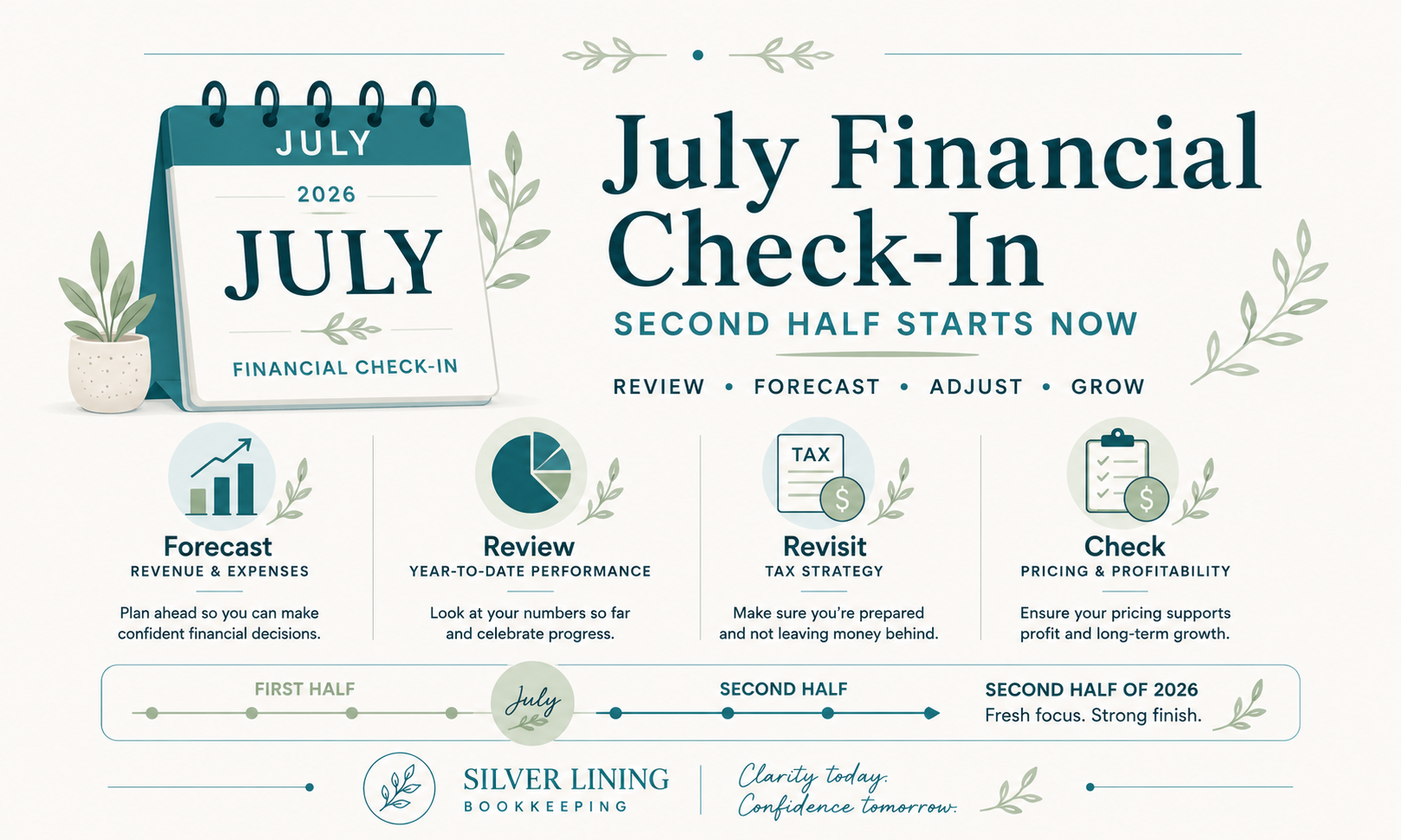
July Financial Check-In: Second Half Starts Now
Business, Bookkeeping, and Taxes
We Made It to the Second Half
July is here, which means the year is officially more than halfway done. Before summer gets away from you, it's worth taking a look at where your business stands financially.
For a lot of business owners, summer brings a shift. Schedules change, revenue fluctuates, and it's easy to let the books slide while life gets busy. A quick review now can save you a lot of stress when fall picks back up.
Key Actions for July
A few things worth doing this month:
Forecast upcoming expenses and any seasonal shifts in revenue
Pull your year-to-date reports and see how your business is actually tracking
If your revenue has increased this year, it may be worth revisiting your tax strategy
Review your pricing and profitability before the second half gets busy
Keep your books current so you know your real profit and cash flow numbers
Upcoming Tax Deadlines
Mark these on your calendar now so they don't sneak up on you.
September 15, 2026, Estimated tax payment for income earned June 1 through August 31.
January 15, 2027, Estimated tax payment for income earned September 1 through December 31.
Missed a payment? Pay it as soon as you can to minimize additional penalties and interest.
A Note from Katie
We are here for all of it: monthly bookkeeping, clean-ups, cash flow reviews, and getting your finances organized so you can head into the second half of the year with clear numbers and less stress.
One more thing: we have a referral bonus right now. If you know a business owner who needs help getting their books in order, send them our way. When they sign up for monthly bookkeeping or a cleanup, there's something in it for you. Just reply, and I'll send you the details.
Enjoy the summer. Take that vacation. We'll be here when you're ready to dig back in.
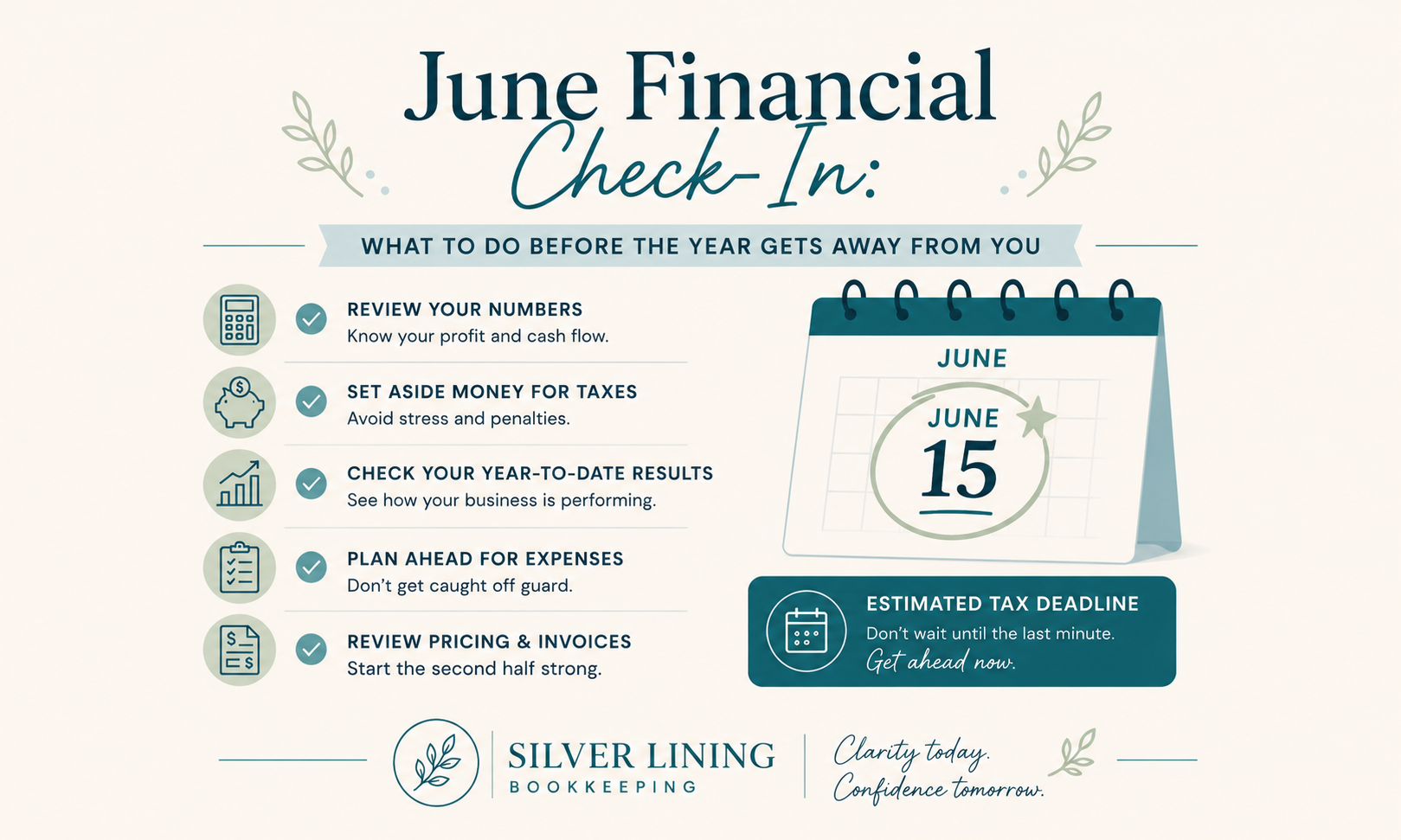
June Financial Check-In: What to Do Before the Year Gets Away From You
Almost halfway through the year and not sure where your business finances stand? This June financial checklist walks small business owners through the key actions to take right now, including your Q2 estimated tax deadline, mid-year bookkeeping clean-up, cash flow planning, and more. Save this for later or share it with a business owner who needs a financial reset before summer.
BUSINESS, BOOKKEEPING, AND TAXES
Almost Halfway There
Can you believe we're almost halfway through the year? Mid-year is one of the best times to review your finances, clean up your books, and make smart adjustments before the second half gets busy.
If you're self-employed, your next federal estimated tax payment is due June 15. Getting ahead of it now means less stress, no penalties, and no cash flow surprises when fall rolls around.
Key Actions for June
Here are a few things worth focusing on this month:
Keep your bookkeeping current, so you actually know your profit and cash flow
Set aside money for your June estimated tax payment before the deadline sneaks up
Review your year-to-date numbers to see how your business is really performing
Forecast upcoming expenses or slower sales periods so you're not caught off guard
Check your pricing, profitability, and any outstanding invoices before the second half begins
Upcoming Tax Deadlines
June 15
Q2 estimated tax payment due (your second payment of the year)
If you have payroll:
Monthly payroll tax deposits
State-level filings, depending on your location
State-specific:
Sales tax deadlines vary by state and can be monthly, quarterly, or annual depending on your business
A Note from Katie
The middle of the year is a great checkpoint. Not to add to your to-do list, but to make sure you're not flying blind heading into the back half.
When your books are current, and your numbers make sense, you can make better decisions around spending, pricing, and planning. That's what we're here to help with.
Whether you need a bookkeeping clean-up, a cash flow review, or just someone to finally get things organized, we'd love to support you. Your books should be one less thing to worry about.
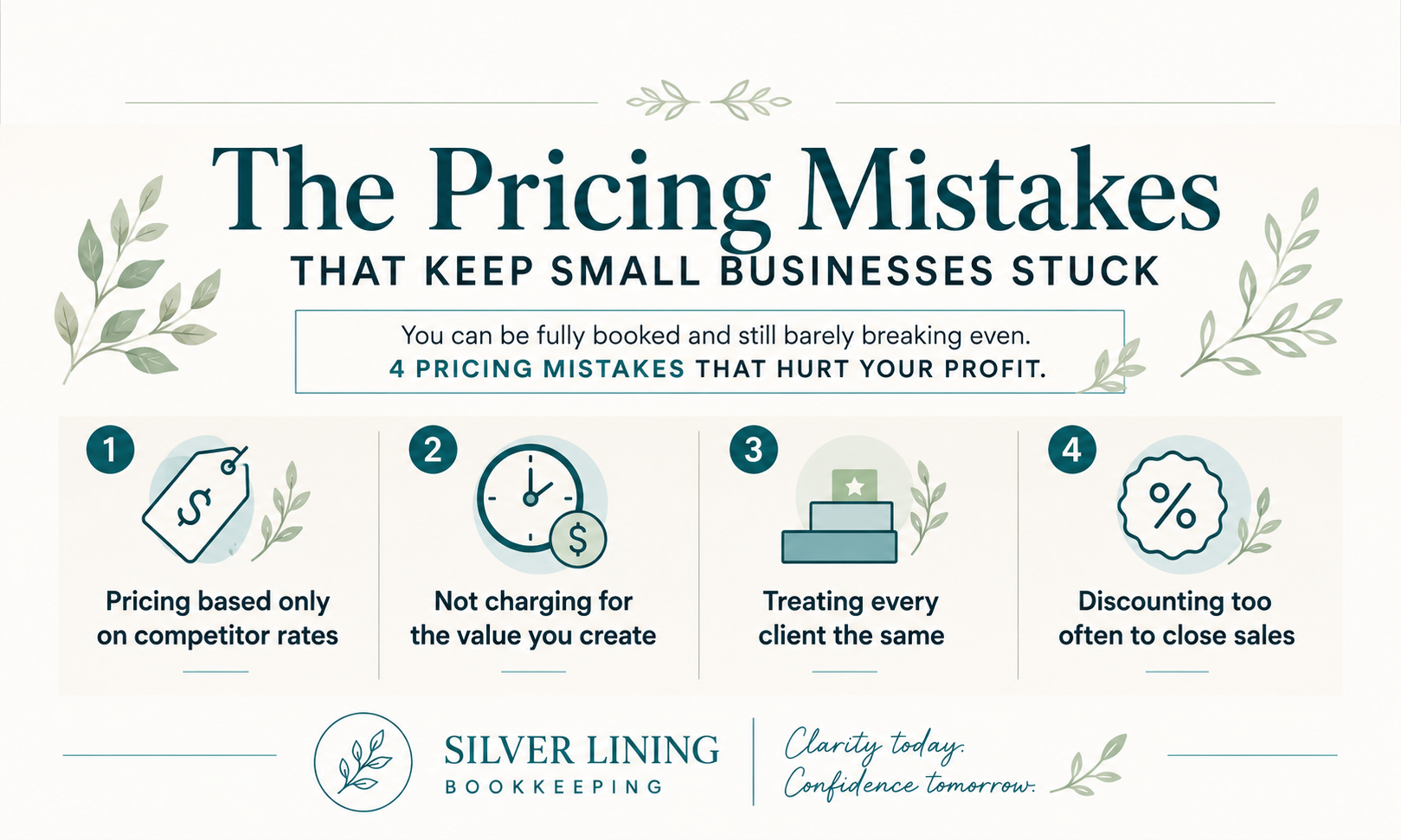
The Pricing Mistakes That Keep Small Businesses Stuck
Making sales but not seeing the profit? Your pricing might be the problem. This post breaks down the most common pricing mistakes small business owners make, including undercharging, copying competitors, and discounting too often, and what to do instead. Save this for your next business review or share it with a business owner who's working hard but not seeing it in their numbers.
You can be fully booked and still barely breaking even. It happens more than you'd think.
When revenue is coming in, but profit isn't following, pricing is usually the first place worth looking. Not because you're doing anything wrong, but because most business owners set their prices early on and never really revisit them.
Here are the mistakes we see most often.
Pricing based on what everyone else charges
What your competitor charges has nothing to do with what your business needs to survive and grow. Their overhead is different. Their expenses are different. Their goals are different. Build your pricing around your actual costs first, then factor in your value, your time, and the results you deliver.
Not charging for the value you create
If your work saves someone time, reduces their stress, helps them grow, or keeps them out of trouble, that's worth real money. Pricing based on hours or tasks alone leaves a lot on the table. Think about what the outcome is worth to your client, not just what it costs you to deliver it.
Treating every client the same
Not every client needs the same level of support, and your pricing shouldn't assume they do. Offering tiers or packages lets clients self-select based on what they actually need. It also tends to improve profitability because you're matching the service level to what you're charging for it.
Dropping your price to close a sale
This one is worth being direct about. When you discount regularly, you train clients to wait for a lower number. You also quietly tell them your original price wasn't real. It's a hard habit to reverse, and it chips away at your margins faster than most people realize.
A Few Things Worth Reviewing This Month
What are your actual costs and profit margins right now?
Which services or products are most profitable?
How much time are you actually spending per client or project?
Do your prices still make sense for where your business is today?
Profitability isn't just about making more sales. It's about making sure every sale is actually moving your business forward.
If your revenue is growing but your profit isn't keeping up, the numbers will tell you why. That's exactly what clean, current books are for. Reach out if you'd like help getting clarity on where things stand.
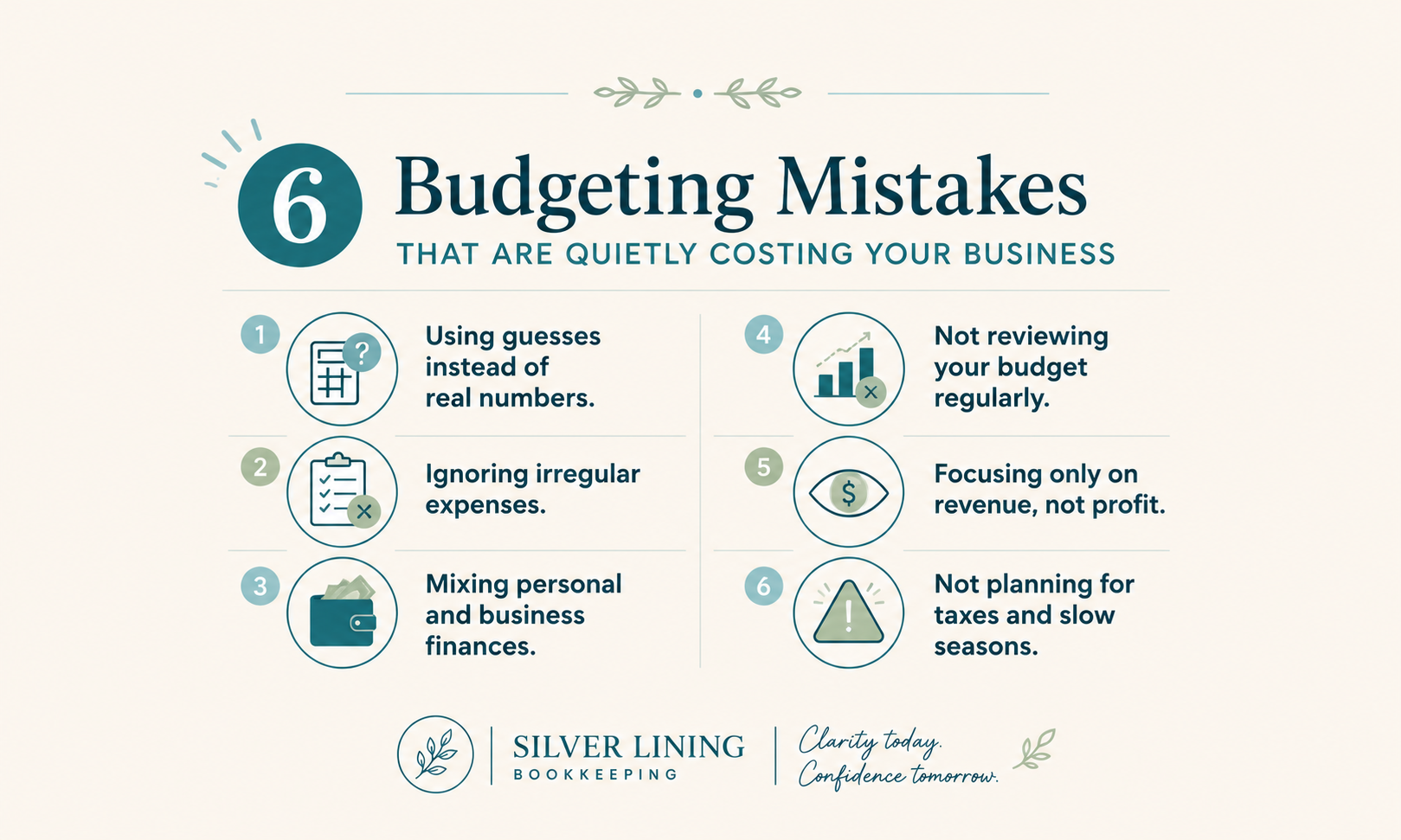
The Budgeting Mistakes That Are Quietly Costing Your Business
Still stressed about money even when revenue looks fine? The problem might be your budget system, not your income. This post breaks down the most common budgeting mistakes small business owners make and what to do instead. Save this for your next bookkeeping session or share it with a business owner who needs a better financial system.
Here's something I see pretty regularly: a business owner who's bringing in solid revenue but still feels financially stressed every single month.
Most of the time, it comes down to a few common budgeting mistakes small business owners make without realizing it. They're not overspending on anything obvious. They're not being irresponsible. They just never had a real system for where the money goes.
A budget sounds boring, but it's really just a plan. And without one, you're making financial decisions based on vibes and whatever's sitting in your checking account. That's a stressful way to run a business.
The most common budgeting mistakes small business owners make include using estimated numbers instead of real data, forgetting to plan for taxes, mixing personal and business expenses, and not reviewing the budget regularly. These are easy to fix once you know what to look for.
Here are the mistakes I see most often, and what to do instead.
1. Using guesses instead of real numbers
A lot of business owners build a budget based on what they think they spend, not what they actually spend. Pull your last three months of bank and card statements and look at the real numbers. Your budget is only useful if it reflects reality. Not sure how to divide it up once you know your numbers? This framework can help.
2. Forgetting about taxes
This one shows up in April, and it's not fun. Taxes aren't a line item you deal with once a year. They need to be part of your monthly plan. A simple habit: set aside a percentage every time money comes in, into an account you don't touch. Treat it like it's already gone. Not sure what percentage to set aside? Start here.
3. Mixing personal and business spending
When your personal and business expenses are tangled together, your budget is basically useless. You can't get a clear picture of what your business actually costs to run. Separate accounts are non-negotiable if you want your numbers to mean anything.
4. Setting it and forgetting it
A budget you made in January and never looked at again isn't a budget; it's a document. Review it monthly. Your business changes, and your budget should too.
5. Ignoring the small stuff
Subscriptions, software, small recurring charges. Individually, they feel insignificant. Collectively, they can add up to several hundred dollars a month you're not thinking about. A quick quarterly review of recurring charges is worth the 20 minutes.
6. Not planning for slow months
If your income is seasonal or inconsistent, your budget needs to reflect that. The months when revenue is strong are the months to set extra aside. Planning ahead for slower periods is a lot less stressful than scrambling through them.
The Bottom Line
None of these mistakes are unusual, and none of them are permanent. Most of the time, getting things under control starts with just getting your books current so you can see what's actually going on.
If your books are a mess or you're not sure where to start, that's exactly what we help with. Reach out and let's talk through where things stand.
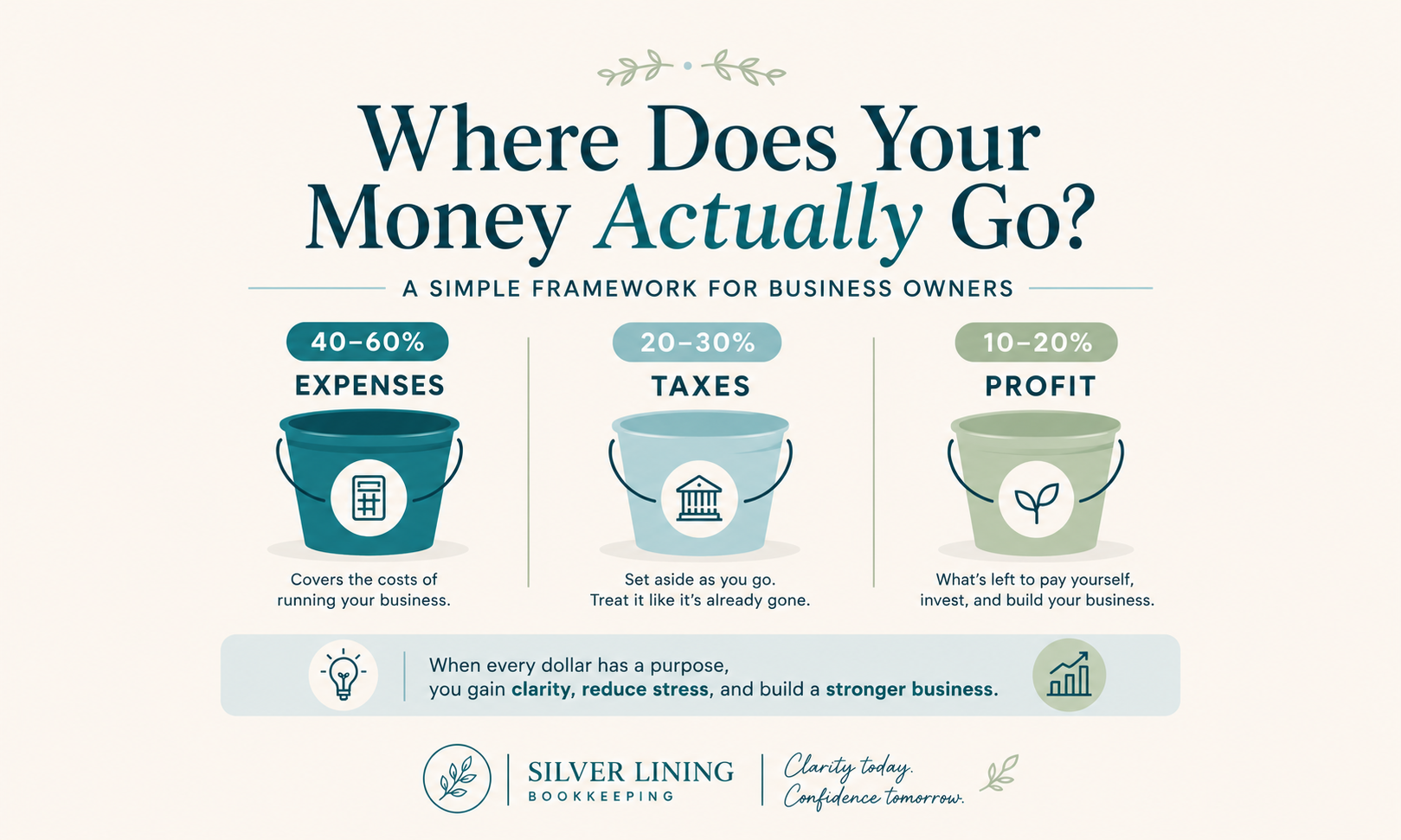
Where Does Your Money Actually Go?
Bringing in revenue but still stressed about money? You might just need a better system. This simple framework breaks down how to allocate your business income across expenses, taxes, and profit so every dollar has a purpose. Save this for your next bookkeeping session or share it with a business owner who needs to get their numbers organized.
A SIMPLE FRAMEWORK FOR BUSINESS OWNERS
Most business owners I talk to are making decent money. They're busy, they're billing, things seem to be moving.
But at the end of the month? They have no idea where it went.
It's one of the most common things we see. Revenue looks fine on paper, but there's still this low-level financial stress that never fully goes away. The problem usually isn't how much you're making. It's that no one ever showed you how to divide it up.
Here's a simple framework to start with.
The Three Buckets
Think about every dollar that comes into your business landing in one of three places: expenses, taxes, and profit. Not an exact science, but a structure you can actually use.
Expenses: 40 to 60% of revenue
This is what it costs to run your business. Software, subscriptions, marketing, contractors, and rent. If this number is creeping above 60%, it's worth taking a closer look at where the money is going.
Taxes: 20 to 30% of profit
This is the one people skip, and then they're surprised in April. Set this aside as you go, ideally into a separate savings account you don't touch. Treat it like it's already gone.
Profit: 10 to 20% of revenue
This is what's left after expenses and taxes. Profit is what lets you pay yourself consistently, invest back into the business, and actually build something instead of just staying afloat.
What This Looks Like in Real Numbers
Say your business brings in $8,000 this month:
$3,200 to $4,800 covers expenses
$1,600 to $2,400 gets set aside for taxes
$800 to $1,600 is yours to keep as profit
When every dollar has a purpose, the stress of not knowing where things stand starts to lift. You stop making decisions based on what's in your checking account and start making them based on what's actually going on in your business.
A Note on These Numbers
These ranges are a starting point, not a rule. Your percentages will vary depending on your industry, your overhead, and where you are in your business. A product-based business looks different from a service business. A newer business looks different from an established one.
But if you've never thought about your money this way before, this is a solid place to start.
Need Help Getting Your Numbers Organized?
If you're not sure what your numbers look like or your books aren't current enough to even know, that's exactly what we help with. Clean books are the foundation. Everything else builds from there.
Reach out if you'd like to talk through where things stand.
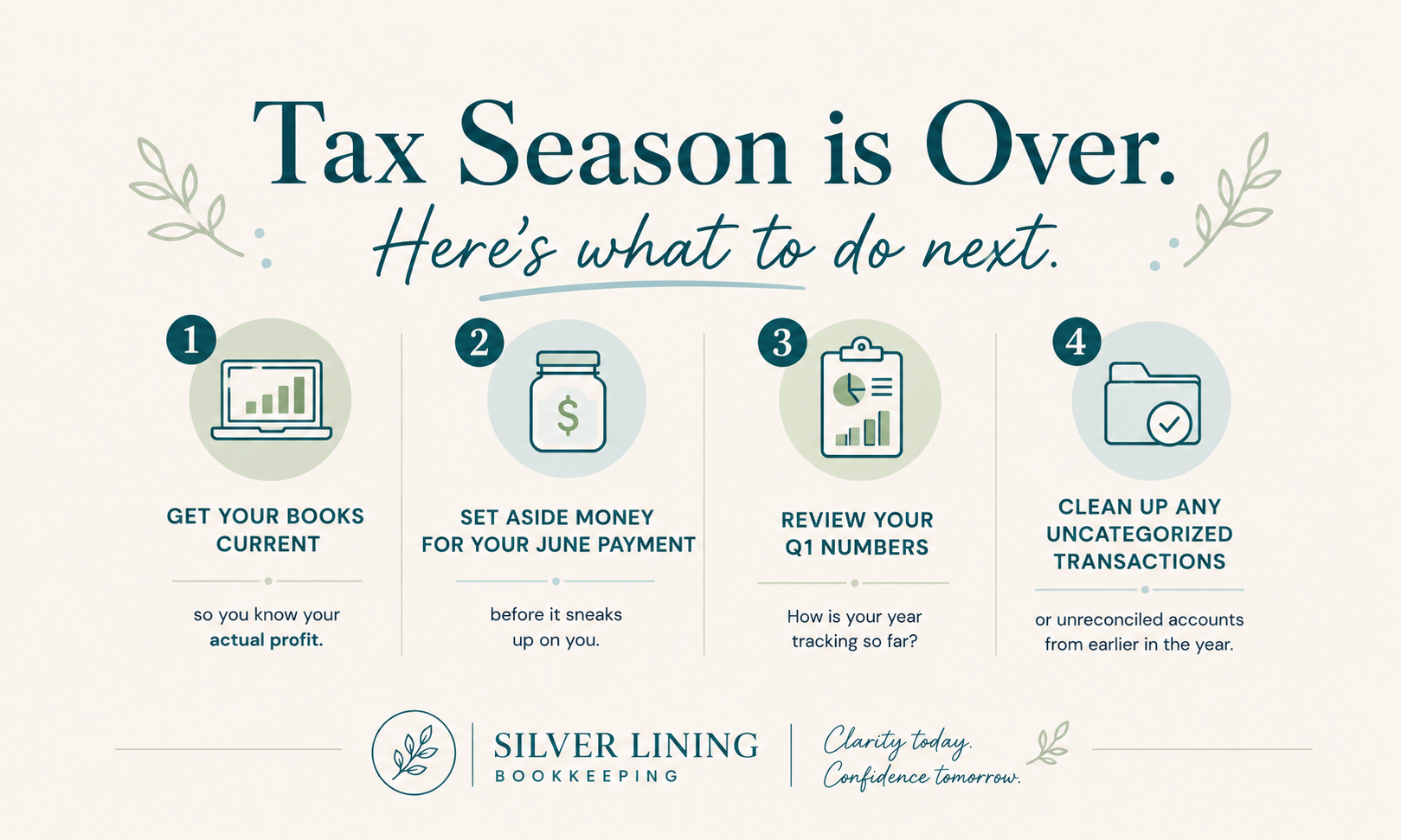
Tax Season is Over. Here's What to Do Next.
You survived tax season. Whether you filed on time, extended, or just handed everything to your accountant and crossed your fingers, it's done. Take a breath.
But before you fully check out, there are a few things worth doing now that will make the rest of your year a lot less stressful.
If you filed an extension
Your new deadline is October 15, 2026. That gives you more time to file, not more time to pay. If you owed taxes and couldn't pay in full by April 15, set up a payment plan at IRS.gov as soon as possible to avoid extra penalties stacking up.
Your next tax deadline is coming faster than you think
If you're self-employed or have income outside of a regular paycheck, you're expected to pay taxes throughout the year through quarterly estimated payments. The next one is due June 15.
That's not far away. Here's what to do between now and then:
Get your books current, so you know your actual profit
Set aside money for your June payment before it sneaks up on you
Review your Q1 numbers. How is your year tracking so far?
Clean up any uncategorized transactions or unreconciled accounts from earlier in the year
The cleaner your books are right now, the easier it is to estimate what you owe and avoid surprises.
Other deadlines to keep on your radar
June 15: Q2 estimated tax payment due
Monthly payroll tax deposits if you have employees
Sales tax filings, which vary by state and can be monthly, quarterly, or annual
The bottom line
Post-tax season is actually one of the best times to get your finances in order. The pressure is off, but the year is still young enough to course-correct if you need to.
This is the time to get clear on your budget, keep an eye on cash flow, and set yourself up to hit your goals in Q3 and Q4.
If your books need a cleanup or you're ready for someone to just handle this for you every month, that's exactly what we do. Reach out and let's talk.